

RFID tracking
Know what’s in the case before it leaves
Rentablez reads every RFID tag in a packed case at once — no line of sight, nothing unpacked. It checks the read against the order and names whatever did not come back, so a shortage surfaces at your loading door instead of at somebody else's event.
- Reads a packed case at once
- Names what did not come back
- Counts a warehouse in a pass
- Works with your barcodes
Case 3 of 5 · Riverside Festival
One sweep of the case — no line-of-sight, nothing unpacked
-
Shure SM58 — dynamic mic
E280·1160·6000·020F·9A41
-
XLR cable 10 m
E280·1160·6000·020F·9B07
-
Moving head — Robe T1
E280·1160·6000·020F·9C22
- No read
DI box — Radial J48
E280·1160·6000·020F·9D18
- No read
Mic clip
E280·1160·6000·020F·9E55
2 items did not come back
Flagged against the order before the truck leaves, not at next week’s stock-take.
Why RFID
A barcode answers “what is this?”. RFID answers “what is missing?”
Both earn their place, and Rentablez runs them together. But only one of them can tell you — while the crew is still standing there and the van has not pulled away — that two things never came back.
-
The van leaves and you already know
A packed case answers in a single sweep. Nothing gets unpacked, nothing has to be held up to a camera, and nobody reads labels off two hundred cables one at a time. The check that always got skipped for being too slow now finishes before the tailgate is up.
-
The slow bleed stops
Kit rarely disappears dramatically. It goes two clamps at a time, a mic clip here, a length of cable there, and you find out from the P&L months later. Reading a return against the order puts a name and a date on the loss the day it happens, while someone still remembers the job.
-
The stock-take stops costing a weekend
Counts get postponed because they cost two people and a Saturday, and a register nobody trusts is a register nobody uses. When a rack counts itself in one pass, counting happens often enough that the numbers stay true and the variances stay small enough to chase.
How it works
Three parts, and only one of them is new to you
You already have the inventory. RFID only adds a way of reading it — the unit, its history and its availability stay exactly where they are.
- 01
The tag
A passive label or hard tag on the unit. No battery: it takes its power from the reader, so it keeps working for as long as the adhesive or the cable tie does.
- 02
The reader
A handheld, a Bluetooth sled, or a portal at the loading door. It wakes every tag in range and collects them all at once — through cases, through bags, through fabric.
- 03
Rentablez
Each tag resolves to the unit it is paired with, and the read lands on whatever you are already doing: a pick, a return, a stock-take. No new record, no second inventory.
Passive tags carry no battery, so there is nothing to charge and nothing to replace on a schedule. The reader energises them and they answer with a unique number Rentablez already holds against the unit — which is why a read is a lookup rather than a new record, and why a tagged inventory is still just your inventory.
Get started
Three steps, and you can stop after the first category
RFID sounds like a warehouse-wide project, and that is the main reason people put it off. It is not one. You can be reading cases by the end of the week with a single category tagged, because RFID and barcode share the same register.
- 01
Tag one category, not the whole warehouse
Start where the losses actually hurt — the cabling, the mics, the linen. Pick the tag type by what it is going onto: a paper inlay for a case or a garment, an on-metal tag for stands and trussing, a cable-tie tag for anything that will not take adhesive.
- 02
Read each tag once against its unit
That single read binds the two. The tag joins the asset tag, serial number and printed label already on that record, so nothing forks and nothing your team already scans stops working.
- 03
Sweep the case instead of counting it
At check-in, Rentablez compares the read against what the order expects and names anything that did not answer. Same motion for a stock-take: read the rack, act on the variance.

Tags and a reader come from a hardware supplier rather than from us, and we will help you scope which categories to tag first so the reader pays for itself on the stock that actually goes missing.
Inside the product
Tag it once, then forget the tag
Pairing happens once. After that the tag is just another name for a unit you already own — and that is exactly what keeps RFID and barcode as one register rather than two systems to keep in step.
Shure SM58 — dynamic microphone
Audio · handheld mics · unit 14 of 40
- Asset tag
- AUD-0114
- Serial number
- 3A21K9077
- Barcode / QR
- Printed · Code128
- RFID · EPC
-
E280 1160 6000 020F 9A41
UHF Gen2 · 96-bit
Linked
One unit, one record. The tag joins the identifiers already on it — barcode labels keep working exactly as before.
Pairing
One unit, one record — not a second inventory
Read a tag against a unit once and it joins the asset tag, serial number and printed label already on that record. Nothing forks. The same unit keeps its order history, its inspections, its maintenance jobs and its documents, and the labels your team already scans carry on working exactly as they did yesterday.
- EPC stored on the existing serialised unit
- Barcode and QR labels keep working unchanged
- Tag a category at a time — no big-bang rollout
- Re-tag a unit when a label is damaged or replaced
Stock-take — Warehouse A
30 Aug 2026 · counted by handheld reader
| Category | Expected | Counted | Variance |
|---|---|---|---|
| Microphones & DI | 240 | 236 | -4 |
| Cabling & multicore | 610 | 610 | — |
| Moving heads & fixtures | 88 | 88 | — |
| Stands & clamps | 415 | 409 | -6 |
| Flight cases | 62 | 63 | +1 |
| Total | 1415 | 1406 | -9 |
Variances open as discrepancies against the units themselves, so the next count starts from a corrected register rather than the same guess.
Stock-take
Count the racks in a pass, and act on the variance
A count is only worth doing if it happens often and if the gaps actually go somewhere. Reading a rack gives you counted against expected per category, and the differences open as discrepancies against the units themselves — so the next count starts from a corrected register instead of the same quiet guess.
- Counted against expected, per category
- Variances raised against the units, not a note
- Recurring stock-takes on a weekly or monthly cadence
- Export the count for your accountant or auditor
RFID or barcode?
Most operators want both, on different stock
RFID is not an upgrade that makes barcodes obsolete. It is better at a different job and worse at some, and knowing which is which is what tells you the handful of categories worth tagging first.
| Barcode / QR | RFID | |
|---|---|---|
| Reads at a time | One | Many, in a single sweep |
| Line of sight | Required — the label must be visible | Not required — reads through a case or a bag |
| Best at | Looking one unit up, confirming a specific item | Counting a set, and finding what is absent |
| Label cost | Cents — print your own in bulk | More per tag, and a reader to buy |
| Works on metal / liquid | Yes, the label just needs to be flat and clean | Needs on-metal tags near metal surfaces |
| Reads a damaged label | No — a scuffed or dirty label fails | Often yes, the chip does not need to be seen |
| Sensible for | Every unit you own | High-volume, high-churn, easily-lost stock |
Barcode and QR generation, printing and scanning are part of inventory & assets and work on every plan.
Hardware
Buy the hardware once, from whoever you like
Rentablez is built for standard passive UHF RFID on EPC Gen2, with Zebra and Chainway handheld and sled readers as the reference hardware. Tags follow the same open standard, so you buy them from any supplier, at whatever volume suits you, and change your mind later without changing your software.
Tags and readers come from a hardware supplier, not from us — there is no hardware margin buried in your subscription. Tell us what you already own, or what you have been quoted, and we will confirm the fit before you commit to an order.
-
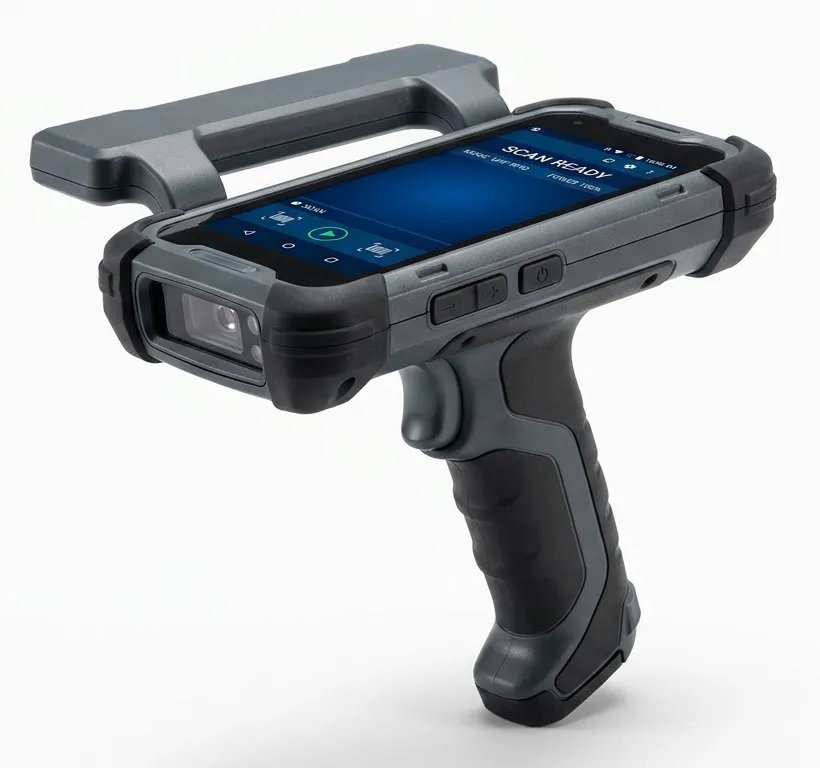
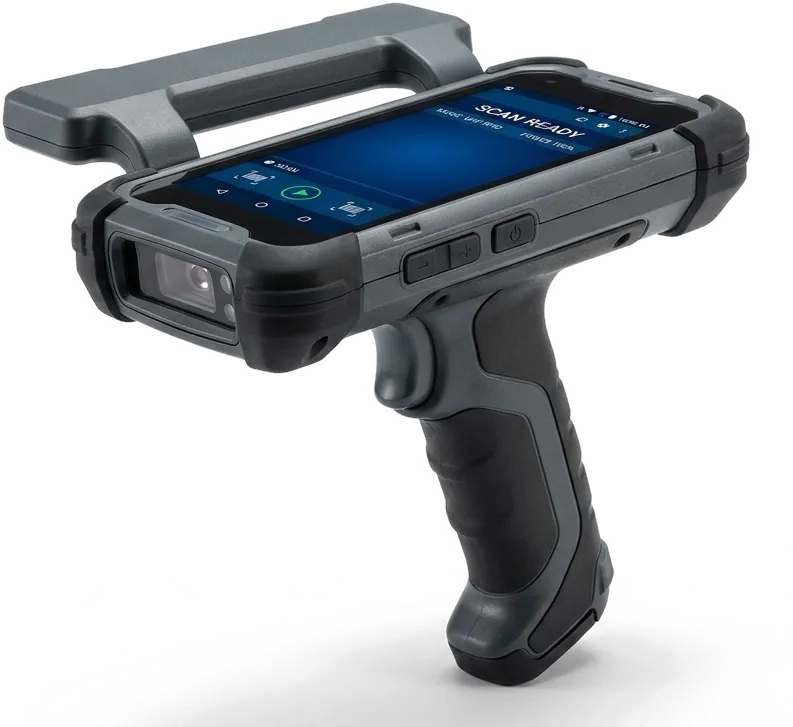
Handheld reader
A rugged UHF terminal your packing crew carries like a phone. Zebra and Chainway handhelds are the reference devices.
-
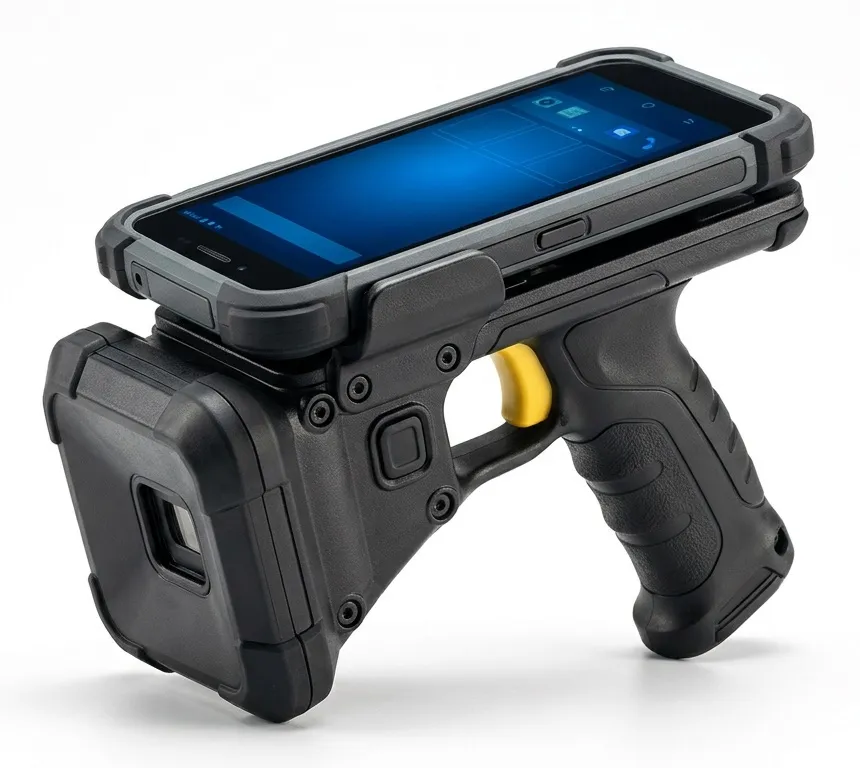
Bluetooth sled
A sled paired to the phone or tablet the crew already carries for pickups and returns.
-
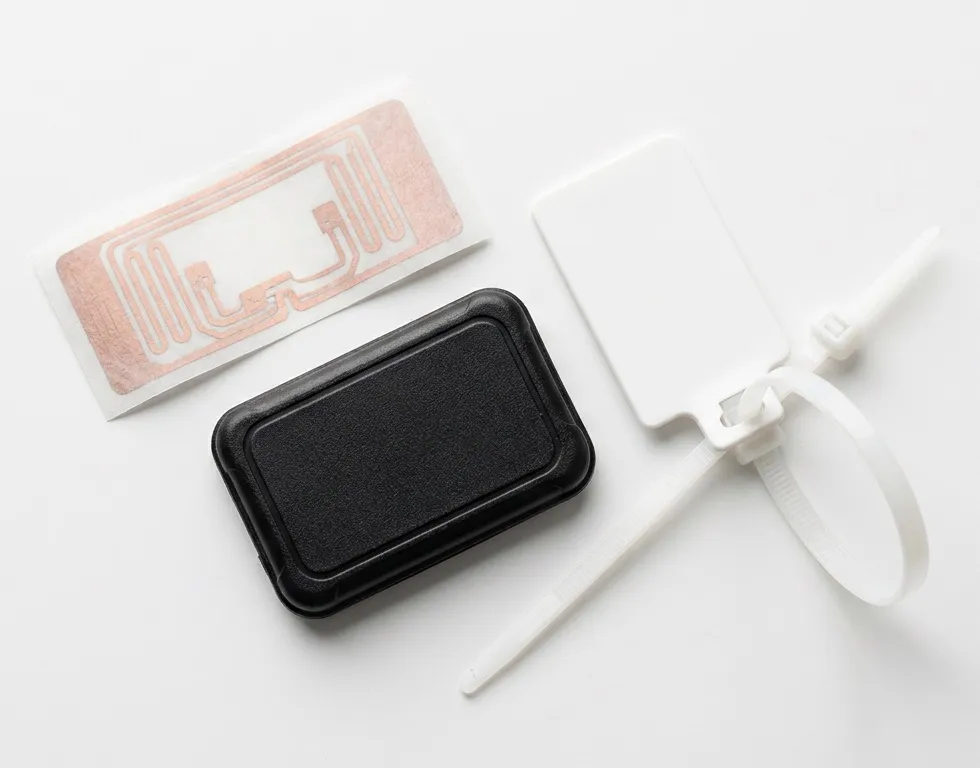
Tags per category
Plain inlays for cases and fabric, on-metal and cable-tie tags for stands, trussing and hardware.
-
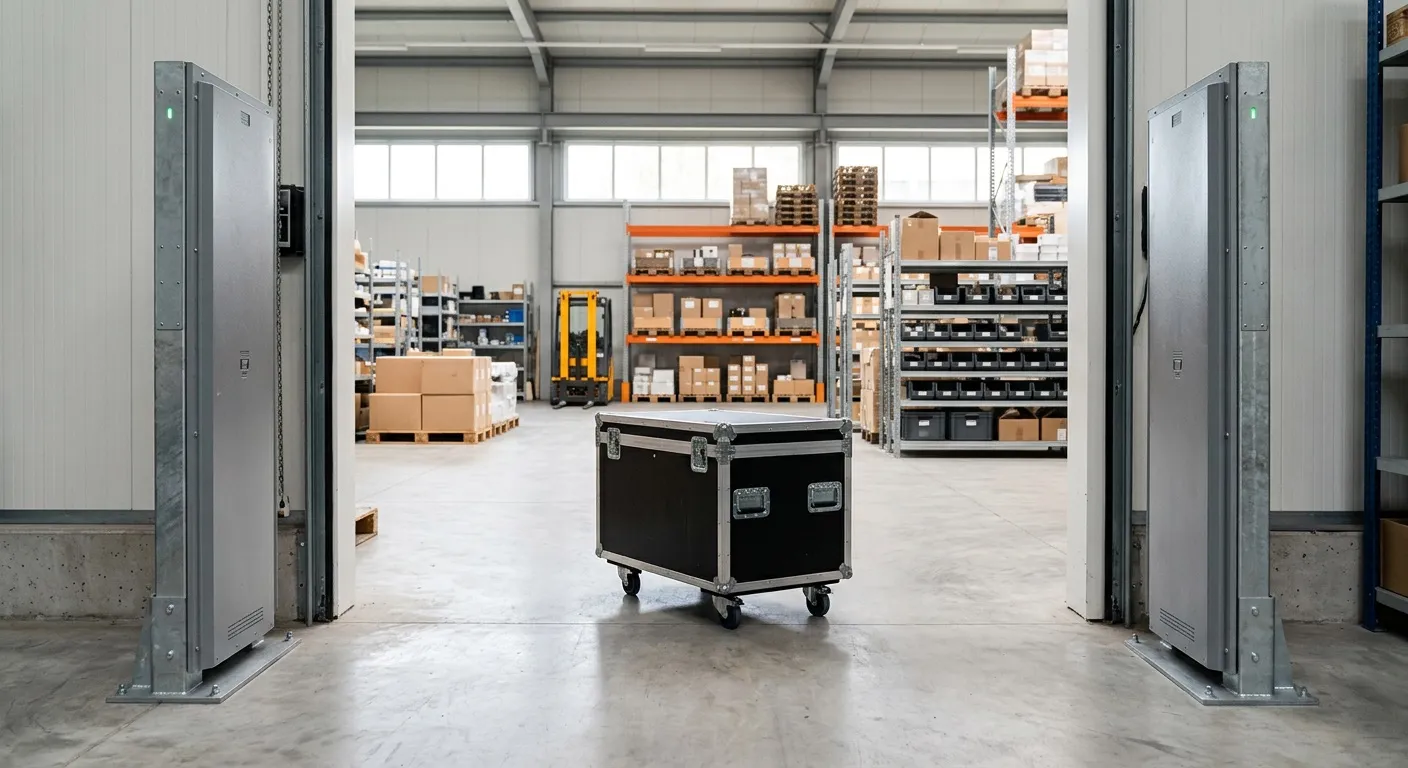
Fixed portal
Antennas either side of the loading door, so a case is read simply by being wheeled through it.
Devices shown are representative UHF Gen2 form factors, not a specific manufacturer's product.
Where it pays off
High volume, high churn, easily lost
RFID earns its tag cost on the stock that moves in bulk and disappears quietly. These are the operations that feel it first — and usually the ones already keeping a mental list of what tends to go walkabout.
-
AV, staging and production
Mics, DI boxes, clamps, adapters and hundreds of metres of cable, packed into cases that go out at noon and come back at two in the morning. The cheapest things in the case are the ones that vanish, and they are exactly the things nobody wants to count by hand at the end of a shift.
-
Party supplies, linen and tableware
Four hundred identical napkins are not four hundred barcode scans. Bulk lines counted in and out in one pass, so a shortage lands against the event that lost it rather than ambushing the next one that needs it.
-
Tech, IT and device fleets
Laptops, tablets and accessories moving between deployments, where the audit trail matters as much as the count — and a missing device is a security conversation, not just a replacement cost.
FAQ
RFID questions
What operators ask before ordering tags and a reader.
Something else? or email sales@rentablez.com.
Is RFID better than barcodes for rental equipment?
Neither replaces the other, and most rental businesses end up running both. A barcode is cheap, prints in bulk and identifies one item at a time, which is right for the bulk of an inventory. RFID reads many tags at once and without line of sight, so it wins on two specific jobs: checking a packed case against an order, and counting a large quantity of similar items. The usual pattern is barcodes everywhere and RFID on the high-volume, high-churn stock — cabling, mics, clamps, linen — where counting by hand is what stops the count happening.
Can RFID read through a flight case?
Yes. Passive UHF RFID does not need line of sight, so a closed case, a fabric bag or a stacked crate can be read without being opened. Metal is the real constraint rather than the case itself: standard label tags perform poorly mounted directly on metal, which is what on-metal tags exist for. Plan tag types per category before ordering in volume.
How long does it take to tag an existing inventory?
That depends entirely on how much of it you tag, which is why we would not advise tagging all of it. Pairing a tag to a unit is a single read against a record that already exists, so the work is physical — applying tags — rather than administrative. Starting with one category and one packing area gets you a working system in a day or two rather than a project.
What kind of RFID does Rentablez use?
Passive UHF RFID on the EPC Gen2 standard — the same standard used across retail and logistics. Tags are unpowered and are read by a handheld, a Bluetooth sled or a fixed portal reader. It is an open standard, so you are not locked to one tag supplier.
Which readers does it work with?
Rentablez is built for standard UHF Gen2 handheld and sled readers, with Zebra and Chainway devices as the reference hardware. Because the tags follow an open standard, other Gen2 readers are workable too — tell us what you already own and we will confirm before you buy anything.
Does RFID replace our barcodes and QR labels?
No. RFID is an additional identifier on the same serialised unit, alongside its asset tag, serial number and printed barcode or QR label. Everything you already print and scan keeps working, and most operators tag only the stock where bulk counting pays — the cases, the cabling, the linen — rather than the whole warehouse.
How do we link a tag to an item?
You read the tag once against the unit in Rentablez and the EPC is stored on that unit’s record. From then on any read of that tag resolves to the unit and everything already attached to it: its order history, inspections, maintenance jobs and documents.
Can we tag bulk stock as well as serialised units?
Yes, and this is where it pays best. Bulk lines such as chairs, linen, cable or clamps are counted as quantities rather than identified one by one, so a rack or a case resolves to a number you can check against what the order expects.
What happens when items are missing?
The read is compared against what the order or the count expects, and anything that does not answer is listed. From there it is the workflow you already use — a shortage on the return, a charge on the order, or a discrepancy against the unit in a stock-take.
Does RFID work on metal items and liquids?
Standard label tags perform poorly mounted directly on metal or against liquid. On-metal tags exist for exactly this and are what you would use on cases, stands, trussing and flight-case hardware. It is worth planning tag types per category before you order in volume.
What does it cost to get started?
Two things sit outside the subscription: the tags and the reader, both bought from a hardware supplier rather than from us. Tag prices depend on type and volume, and on-metal tags cost more than plain labels. We will help you scope which categories to tag first so the reader pays for itself on the stock that actually goes missing.
Do we have to tag everything before it is useful?
No, and we would advise against it. Start with one category where losses hurt — cabling, mics, linen — and one packing area. RFID and barcode coexist on the same register, so a partly tagged inventory is a normal state, not a broken one.
Can we see RFID before we commit to hardware?
Yes. Book a demo and we will walk through the tagging, the pick and the stock-take against your own categories, so you can size the tag order and choose a reader with the workflow in front of you.
See it against your own stock
Book a 30-minute demo and we will walk the tagging, the pick and the stock-take through your own categories — so you can size a tag order and choose a reader with the workflow in front of you, not a brochure.